Kalshi odds represent real-time probabilities for future events, expressed through Yes/No contract prices. Instead of traditional betting odds, each price reflects the market’s collective view on how likely an outcome is to happen.
On this page, we break down how Kalshi probabilities work, how to read contract prices, and what they can tell you about market sentiment across politics, economics, sports, and more.
Kalshi Odds: Pros and Cons
Pros and cons
- Odds map cleanly to probabilities
- Simple $1 payout per correct contract
- Clear rules and data sources
What Kalshi Odds Actually Are
Kalshi is a platform that lets people trade on real world events. It asks very clear questions with a yes or no answer. On Kalshi, you do not bet “$10 to win $18” like a sportsbook slip. Instead, you buy shares in “Yes” or “No”. Each share has a fixed payoff:
- If you are right, the share settles at $1.
- If you are wrong, the share settles at $0.
The number you see on screen for each side is the Kalshi odd or probability. It is just the current market price of that share. Any honest
Kalshi review
has to start here, because until you understand that every price is just what someone will pay today for a $1-or-$0 outcome, the odds screen looks confusing.
If “Yes” is trading at $0.81, you pay 81 cents now for the chance at $1. The upside is smaller, but the market is saying the event looks much more likely.
Because the payoff is always $1 or $0, the price looks a lot like a probability. A price near $0.20 reads as “about a 20 percent chance”. A price near $0.75 reads as “about a 75 percent chance”. That is all Kalshi odds really are: live prices between $0 and $1 that show what a crowd of traders is willing to pay if a specific event happens. Whether the question is about inflation, elections or what some people loosely describe as
Kalshi sports predictions
on sports-linked milestones and data.
| If the Kalshi price is… | The crowd is basically saying… | If the event happens | If the event does not happen |
How to Place a Kalshi Trade Using the Odds
If you decide to use Kalshi, you need a plan
-
Step 1: Use the On-Page Banners and Open a Kalshi Account
Before you think about odds, you need an account. Use the on-page banners on this page to go straight to the official Kalshi site. Click through and fill in your details. New users will have a small amount of bonus credit unlocked after placing a set volume of trades as a welcome bonus.
-
Step 2: Read the Question Slowly
Start with the headline question. Kalshi always writes it plainly. All the trades are
Kalshi event contracts
with the same strict $1-or-$0 structure, so read the rule page.
-
Step 3: Open the Rules and Check the Source
Every market has a rule page under the title. You might see a statistics agency, an election commission, or a central bank calendar.
-
Step 4: Look at the Odds and Translate Them
Now look at the price for “Yes” and “No”. Remember that each price sits between $0 and $1 and behaves like a rough probability. A Yes price of $0.27 means the crowd is treating the event as something like a 27 percent chance. A Yes price of $0.74 means roughly 74 percent in their view. Before you click anything, decide whether you truly think the market is too high or too low.
-
Step 5: Choose Your Side and Your Buy Amount
If you still want to trade, pick a side. Do you want to own “Yes” or “No” at this price? Then choose how many shares you are comfortable buying. Multiply the price by the number of shares to see exactly how much you are risking. Your maximum loss is what you pay today. Your maximum gain is $1 per share minus the price you paid.
-
Step 6: Place the Order and Manage It Like an Adult
When everything looks right, place your order. You can use a limit order if you want a specific price, or accept the current quote if you are happy with it. After that, watch how the odds move with new data. If the price swings in your favour, you can sell early and lock in smaller trading gains. If it swings against you, decide in advance how much pain you are willing to take before you close.
![kalshi trade main]()
Trade on the outcome of events at Kalshi
![Kalshi pbt mobile]()
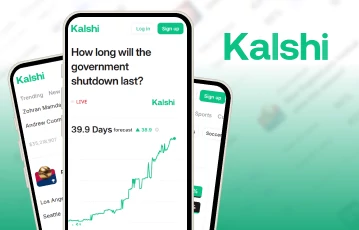
Make predictions anytime with your phone at Kalshi
Finally, remember you do not need a position in every market on the screen. Kalshi lists far more questions than any one person can track properly. Pick a few areas you genuinely understand and ignore the rest. If you decide to try the platform, use the on-page banners on this site to reach the official Kalshi pages, check that you are eligible, and look for the current welcome offer of $10 in bonus credit unlocked after you place about $100 in trades.
Terms and conditions apply and can change. Read the rule page. Read the latest news. If you cannot explain why the price is that high, you have no business buying it. Lastly, keep your buy amount small enough that a bad run would be annoying, not life-changing. That applies whether you are looking at
Kalshi election trading, macro data, or any other niche. These contracts settle in full. There is no soft landing if the world surprises you.
FAQs on Kalshi Odds
🧮 What Do Kalshi Odds Actually Mean?
Kalshi odds are just prices between $0 and $1 on a yes or no question. A price of $0.25 means you pay 25 cents now for a $1 payout if the event happens, which roughly lines up with a 25% crowd estimate.
📊 How Should Beginners Use Kalshi Odds?
Start by watching a few markets without staking money. When you do begin trading, use tiny sizes, focus on questions you can explain in plain language, and always know your maximum loss before you buy a single share.
⚖️ Are Kalshi Odds Better Than Normal Betting Odds?
Kalshi odds are easier to read than most sportsbook formats because every price maps directly to a $1-or-$0 outcome and a rough probability. Clearer odds help you think, but they do not remove risk.


 Available with Dimers Pro