Our Expert Tip for Climate Traders (Updated 11/11/2026)
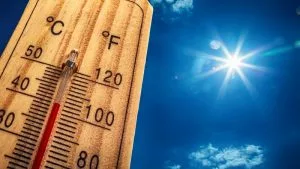
On Kalshi's "Will 2026 be the hottest year ever?" market, cumulative trading volume has climbed past $428,800 as global surface temperature anomalies through October 2026 are finalized. The central limit order book reflects a heavy consensus toward a record-breaking global print, pricing the "Yes" contract at a 74.0% implied probability (74.0¢ Yes / 26.0¢ No).
Unlike localized daily weather contracts, this macro-environmental market features strict scientific settlement parameters: it resolves against NASA’s Goddard Institute for Space Studies (GISS) Land-Ocean Temperature Index. To pay out on "Yes," the 2026 unsmoothed temperature anomaly must officially exceed both the previous historical baseline and the 1.28°C threshold when NASA releases its certified annual summary.
Step-by-Step Payout Arithmetic:
- 2026 Hottest Year on Record "Yes" Contract
(74.0¢ Ask / 74% Implied Probability): Purchasing 100 contracts at 74.0¢ requires a capital outlay of $74.00. If NASA GISS confirms 2026 as the warmest year on record, the position settles at $1.00 per contract ($100.00 total gross payout), generating $26.00 in gross profit before exchange fees—a 35.1% return on capital (ROC).
- 2026 Hottest Year on Record "No" Contract
(26.0¢ Ask / 26% Implied Probability): Purchasing 100 contracts at 26.0¢ costs $26.00. If late-Q4 atmospheric cooling brings the annual anomaly below record levels, the contracts settle at $1.00 ($100.00 total gross payout), securing $74.00 in gross profit—a 284.6% return on capital.
- Global Anomaly > 1.30°C "Yes" Contract
(61.0¢ Ask / 61% Implied Probability): Purchasing 100 contracts at 61.0¢ costs $61.00. If the global temperature anomaly exceeds 1.30°C, the position settles at $1.00 each ($100.00 total gross payout), locking in $39.00 in gross profit—a 63.9% return on capital.
While summer El Niño conditions drove "Yes" shares above 80¢, finalized autumn data showing an ENSO-neutral transition into weak La Niña conditions has introduced two-way volume. Traders holding lower summer entries have taken advantage of the secondary order book to lock in profits, while institutional desks utilize range brackets to hedge seasonal energy and heating degree day (HDD) exposure.
Quick Facts About Climate Prediction Sites
- CFTC Regulatory Framework: Regulated environmental derivatives trade under the Commodity Exchange Act (CEA). Platforms like Kalshi and Crypto.com Derivatives North America (CDNA) operate as CFTC-licensed Designated Contract Markets (DCMs), ensuring trader funds are custodied in segregated bank accounts isolated from exchange operating capital.
- Objective Ground-Truth Resolution: Weather and climate contracts resolve strictly against certified, post-event observational data published by official scientific agencies—including National Weather Service (NWS) Daily Climate Reports (CLI), Automated Surface Observing Systems (ASOS), the National Hurricane Center (NHC), and NASA GISS. Predictive computer models (such as the GFS or ECMWF) never settle contracts.
- Station-Specific ICAO Mapping: Daily municipal temperature contracts track precise scientific observation stations rather than broad regional forecasts. For example, New York City contracts measure Central Park (KNYC), while Chicago contracts measure O'Hare International Airport (KORD). Traders must check the designated 4-letter ICAO station code in the contract rulebook to manage local microclimate basis risk.
- Laddered 2°F Band Architecture: Municipal high/low temperature order books trade as a series of sequential, mutually exclusive 2°F strike bands (e.g., 68–69°F, 70–71°F, 72–73°F). Because exactly one band settles at $1.00 while all others expire at $0.00, the aggregate price across the ladder sums to approximately $1.00, enabling quantitative range and multi-bracket strategies.
- Quality-Controlled Settlement Timing: Daily temperature observation cycles run midnight-to-midnight local station time. Payouts do not finalize on preliminary afternoon thermometer readings; they settle only after the NWS compiles and issues its quality-controlled morning CLI report, protecting traders against raw telemetry errors.
- Parametric Risk Hedging (Micro-Insurance): Climate contracts function as capital-efficient parametric risk-transfer mechanisms. Agricultural operators, ski resorts, municipal utilities, and event promoters use weather derivatives to hedge against unseasonal freeze events, snowfall deficits, or extreme heating degree days without commercial insurance overhead.
- Continuous Secondary Liquidity: Unlike traditional insurance policies or fixed sports bets, prediction market contracts trade on continuous central limit order books. Traders can enter, adjust, or fully close positions at fair market value prior to official settlement as fresh satellite and radar telemetry becomes available.
- Favorable Derivatives Tax Treatment: Profits and losses from event derivatives on CFTC-regulated exchanges are classified as capital gains on financial transactions. Platforms issue annual IRS Form 1099-B statements, allowing traders to offset losses directly against capital gains and deduct exchange fees.
Pros and Cons of Climate Prediction Sites
Pros and Cons
- Objective settlement verified by official scientific agencies (NWS, NOAA, NASA)
- Capital-efficient parametric hedging for energy, ski, and agricultural businesses
- 2°F laddered strike bands enable market-neutral bracket and range strategies
- Favorable IRS Form 1099-B tax treatment with aggregate net reporting and loss deductions
- Station-specific microclimate basis risk between local areas and official airport ASOS sensors
- Niche daily weather contracts can experience wider bid-ask spreads during stable weather patterns
- Capital tied to annual climate indices remains locked until official year-end agency releases
Top 5 Prediction Sites That Allow Climate Forecasts
Weather is one of the few categories where nature itself settles every contract, and each platform handles that differently. Here's how Kalshi, Polymarket, OG, Crypto.com, and MooMoo structure their climate markets, from daily city forecasts to season-long hurricane market questions.
Here’s our experience making climate predictions at these trading apps:
| Climate prediction sites |
Climate market details |
| Kalshi |
Daily and hourly temperature brackets for a dozen-plus US cities, hurricane landfall and category markets, snow and rainfall thresholds, broader climate change questions, and natural disaster contracts (wildfires, earthquakes, and similar events) |
| Polymarket |
Daily high-temperature markets across cities on six continents, hurricane landfall probability and season-long storm totals, monthly tornado counts, ENSO (El Niño/La Niña) state markets, and questions on where the current year ranks among the hottest on record |
| OG |
A small set of long-horizon climate questions, most notably where the current year will rank among the hottest years on record |
| Crypto.com |
Long-horizon climate contracts such as the year's ranking among hottest years on record, offered within its broader Predict category alongside politics and economics |
| MooMoo |
Climate and weather listed as an official supported category, integrated into the same brokerage app used for stocks and crypto, though daily city-level granularity is thinner than Kalshi or Polymarket |
Kalshi
Kalshi features the most comprehensive, data-driven climate and weather catalog in the regulated U.S. market, operating as a CFTC-regulated Designated Contract Market with direct USD settlement.
The exchange is widely recognized for its municipal daily high and low temperature ladders across dozens of major metropolitan centers, featuring sequential 2°F strike bands (e.g., New York, Chicago, Austin, Miami) that let traders forecast precise local outcomes. Beyond daily temperature contracts, Kalshi lists hourly temperature brackets, seasonal snowfall depth ladders across premier ski corridors (such as Lake Tahoe and the Colorado Rockies), Atlantic hurricane season milestones, and annual global temperature anomaly records.
Kalshi enforces transparent settlement protocols: daily high and low contracts resolve via the National Weather Service (NWS) Daily Climate Report (CLI) from certified airport ASOS stations, hourly contracts resolve through The Weather Company, snowfall settles via USDA/NRCS SNOTEL and NWS NOWData, and tropical systems track National Hurricane Center (NHC) advisories. New accounts registering with promo code DIMERS can claim an exclusive 'Trade $25, Get $55 Guaranteed Bonus' once $25 in eligible transaction volume is cleared.
Polymarket
Operating under its regulated DCM infrastructure and QCX clearinghouse architecture, Polymarket US approaches environmental derivatives through a macro data-science lens. The platform caters to quantitative traders focused on planetary climate shifts and large-scale atmospheric phenomena.
Core markets include annual global temperature anomalies (such as where 2026 will rank historically), monthly global sea-surface temperature deviations, Arctic sea-ice extent thresholds, and cumulative Accumulated Cyclone Energy (ACE) index metrics. Orders match off-chain with zero gas fees and clear in digital-dollar stablecoins (USDC). Contracts resolve strictly against open-access scientific datasets provided by NASA GISS, NOAA NCEI, and the European Copernicus Climate Change Service (C3S).
Crypto.com
Crypto.com delivers CFTC-regulated environmental trading through its legally segregated subsidiary, Crypto.com | Derivatives North America (CDNA). Environmental derivatives trade alongside its broader suite of financial, interest rate, and commodity event contracts within the primary retail app.
CDNA’s environmental catalog focuses on seasonal weather risk parameters that directly influence energy demand and agricultural production. Markets cover annual global heat records, regional drought severity indices, and extreme seasonal temperature thresholds.
All contracts clear under a cost-effective fee structure: positions held through final maturity incur a $0.00 settlement fee, allowing winning contracts to clear the full $1.00 payout with zero platform deductions.
OG
Launched in 2026 as Crypto.com's dedicated mobile prediction client, OG provides a streamlined, social-first interface for trading major environmental milestones. Powered by CDNA’s CFTC-regulated clearing engine, OG lists binary 1¢ to 99¢ event contracts covering high-visibility climate headlines.
The platform eliminates the complexity of multi-tiered municipal weather ladders, focusing instead on marquee environmental events—including historical global heat records, category-specific hurricane landfalls, and severe winter storm outbreaks. The app integrates real-time community sentiment meters and active discussion channels alongside order books, making it easy to gauge market consensus as extreme weather systems develop.
MooMoo
MooMoo integrates weather and environmental event contracts directly into its professional-grade retail brokerage platform through an introducing broker partnership with Kalshi.
MooMoo provides direct access to Kalshi’s full catalog of weather derivatives, including municipal temperature ladders and seasonal snowfall totals. Its core advantage is cross-asset execution: traders can manage weather contracts alongside shares of municipal utility providers, agricultural equipment manufacturers, and energy ETFs (such as UNG and XLE). All contracts clear under Kalshi's CFTC Designated Contract Market rulebook, resolving on official NWS CLI and NOAA station logs with direct USD fiat settlement.
Active Climate & Weather Order Book Pricing November2026
With late autumn underway, order-book liquidity reflects active positioning across full-year global anomaly milestones, early-winter snowfall thresholds, and seasonal municipal temperature brackets:
| Environmental/Weather Market | Yes" Price (Implied Probability) | No" Price | 24-Hour Cleared Volume | Primary Settlement Benchmark/Authority |
| 2026 Confirmed Warmest Year on Record | 74¢ (74%) | 26¢ | $428,800 (Cumulative) | NASA GISS Land-Ocean Temperature Index |
| Denver Int'l (KDEN): Snowfall Before Nov 15 | 32¢ (32%) | 68¢ | $84,200 | NWS Daily Climate Report (CLI) / NOWData |
| NYC Central Park (KNYC): Thanksgiving High > 52°F | 55¢ (55%) | 45¢ | $112,600 | NWS Daily Climate Report (CLI) |
| Chicago O'Hare (KORD): First Sub-20°F Low by Nov 30 | 63¢ (63%) | 37¢ | $91,400 | NWS Daily Climate Report (CLI) |
| 2026 Atlantic Basin: Additional Named Storm by Nov 30 | 18¢ (18%) | 82¢ | $164,000 | National Hurricane Center (NHC) Official Bulletins |
| Q4 2026 Heating Degree Days (HDD) Above Normal | 47¢ (47%) | 53¢ | $78,500 | NOAA Climate Prediction Center (CPC) |
Criteria for Choosing Our Top 5 Sites for Climate Predictions
Before picking our top sites that support predicting the weather, here are the criteria that informed our decision:
🌍 Various Climate Markets
The first thing we always look for is the available climate prediction market. We prioritize sites with numerous markets for climate events. For context, the prediction-trading app should feature climate contracts for rain and snow, climate change, daily temperatures, and natural disasters. That way, traders will have various options to try.
All the prediction trading sites we recommended in this article are regulated by the Commodity Futures Trading Commission (CFTC). This is one of the first things we check for, as we wouldn't want to include any site that doesn't operate within the legal framework. CFTC regulation ensures these sites maintain top-notch security for traders while upholding market integrity.
📊 Other Prediction Categories
Although our focus is on making predictions on climate events, we ensure that any site on our list features other markets as well. We look for contracts in categories such as sports, crypto, politics, elections, culture, finance, and the economy. This ensures traders won't get bored making forecasts on the same topic. For instance, we enjoy making political predictions at Kalshi. You can forecast major elections on the site.
Security is one of the criteria we use to vet any prediction-trading company we may recommend. We always choose sites that protect their traders. Hence, we check for advanced SSL encryption technology and two-factor authentication for additional security.
Although prediction sites are not big on bonuses, some of these trading brands usually offer promotions to help traders forecast more events. We usually look out for sites where traders can access these promotions. For instance, Kalshi offers two bug bounty programs. As for Polymarket, you get two regular promotions ($1 on active order limits and an annualized rate for long-term orders).
How to Sign Up at Climate Prediction Sites
Ready to start trading on weather anomalies, hurricane season outcomes, and macro environmental trends on
prediction market apps? The good news is that signing up to a CFTC-regulated event exchange or a decentralized weather prediction platform is straightforward. Because these platforms function as financial exchanges rather than traditional betting sites, the onboarding process mirrors opening a standard retail brokerage account.
Follow our step-by-step guide below to securely set up your account and start trading climate prediction markets today.
-
Select a Top-Rated Climate Prediction Exchange: Browse our list of recommended climate prediction platforms and click any of our links to jump straight to their official site.
-
Register and Create Your Account:
Hit the "Sign Up" or "Register" button on the platform's homepage or mobile app. Provide your email, full legal name, date of birth, and create a strong password. Then, enter the verification code they text or email you.
-
Complete Identity Verification (KYC Compliance):
Because legal financial platforms in the US have to follow standard consumer protection laws, you'll need to complete a quick identity check. Just snap a clear photo of your government-issued ID (like a driver's license) to unlock full access to the trading dashboard.
-
Fund Your Trading Wallet:
Head over to the "Deposit" or banking tab to load cash into your account. Depending on the platform you go with, you can instantly link your bank via ACH transfer, use a debit card, or securely connect a crypto wallet to deposit stablecoins like USDC.
-
Execute Your First Climate Prediction Trade:
Head to the climate and weather section of the exchange to check out live contracts tracking daily temperature anomalies, hurricane naming races, or long-term global emissions targets. Pick your stance, choose your contract, and lock in your first "Yes" or "No" position.
Strategic Trading Tips for Weather & Climate Derivatives
🌡️ Account for Station-Specific Microclimates
Never trade a city temperature contract using a general metropolitan forecast. Municipal contracts settle at specific Automated Surface Observing Systems (ASOS). In New York, for example, LaGuardia Airport (KLGA) routinely records daily high temperatures 1°F to 3°F higher than the Central Park observatory (KNYC) due to airport asphalt heat island effects. Always confirm the ICAO station code in the contract rulebook before placing an order.
📊 Construct Delta-Hedged Range Brackets
Daily temperature markets trade as a sequence of mutually exclusive 2°F bands. If meteorology models show high uncertainty between 70°F and 75°F, buy adjacent bands (e.g., 70–71°F at 25¢, 72–73°F at 35¢, and 74–75°F at 20¢). Because a winning band settles at $1.00 ($100 payout per 100 shares), your combined outlay of 80¢ yields a profitable outcome if the final temperature falls anywhere within that 6-degree corridor.
🔄 Trade Satellite Revisions and Exit Early
You do not need to hold contracts through final morning NWS CLI publication. Weather order books trade continuously. If an approaching cold front accelerates on radar and drives your "Low Below 30°F" contract from 20¢ to 65¢, sell into the rising liquidity to lock in profits, eliminating the risk of late-night cloud cover trapping ground heat.
🛡️ Hedge Commercial Weather Risk Directly
Businesses with weather-dependent revenue models can use event contracts as low-cost parametric insurance. A ski resort operator facing a warm early winter can purchase "Yes" contracts on high temperatures or low snowpack to offset lost ticket revenue, establishing defined-risk financial protection without insurance underwriting fees.
Conclusion – Trade Climate Prediction Markets at the Top Sites
Prediction trading sites have become our favorite place to unwind after we discovered them a few months ago. You can use your in-depth knowledge to forecast real-world events, including climate change and temperatures.
While searching for the best prediction trading apps to forecast climate-related events, we found Kalshi and Polymarket to be two of the best. These sites are CFTC-regulated and offer numerous markets in each prediction category.
Depending on your preferred site, you may score bonuses and promotions. The trading fees are low, and you can always adjust or cancel your forecasts before the event occurs.
If you're ready to forecast hurricanes, snow, rain, and other related climate events, click the banners on this page to sign up at your chosen prediction trading site.
Trading on Climate FAQs
🌡️ What Are Climate Prediction Markets?
Climate prediction markets are federally regulated financial exchanges where participants trade binary event contracts ($0.01 to $0.99) tied to objective meteorological and environmental outcomes. Contracts settle at $1.00 if the designated scientific condition is met and $0.00 if it is not.
⚖️ Are Weather and Climate Prediction Markets Legal in the U.S.?
Yes. Event contracts offered on CFTC-licensed Designated Contract Markets (such as Kalshi and CDNA) operate legally under federal commodities law. Customer collateral is safeguarded in segregated bank accounts under the Commodity Exchange Act.
🛰️ Which Scientific Agencies Resolve Climate Event Contracts?
Contracts settle strictly against certified governmental and scientific sources, including the National Weather Service (NWS) Daily Climate Report (CLI), Automated Surface Observing Systems (ASOS), the National Hurricane Center (NHC), and NASA’s Goddard Institute for Space Studies (GISS). Speculative computer models never settle contracts.
🏢 Why Do Different Exchanges Show Different Prices for the Same City?
Exchanges frequently monitor different physical observation stations within the same metropolitan area. For example, one platform may track Central Park (KNYC), while another tracks LaGuardia Airport (KLGA). Because asphalt runways and maritime coastlines create microclimates, contracts reflect different temperature expectations.
💰 What Fees Apply to Trading Climate Contracts?
Trading fees vary by platform. Crypto.com (CDNA) waives all exchange fees ($0.00) on contracts held to maturity, charging a flat $0.02 fee only on early secondary liquidations. Kalshi charges volume-scaled taker fees capped at minimal per-contract rates, while passive resting limit orders incur 0% maker fees.
For guidance on responsible trading and risk awareness, the following free official resources are available:

To make sure you get accurate and helpful information, this guide has been edited by
Mac Douglass
as part of our fact-checking process.
Advertiser disclosure


 Available with Dimers Pro