Polymarket odds are not your traditional sportsbook odds. Yes, they tell you the probability of an event happening, but they present it in a different format from what you will find on conventional sportsbooks.
In this simple guide, we will delve into how “odds” operate on the prediction market. You will learn what these numbers represent, how to make trades with them, and how they are directly related to pricing on the platform. We will also include a few mistakes you might make when reading these numbers, along with how to avoid them.
What Are Polymarket Odds and How Do They Work?
As we've said, Polymarket is not a conventional sportsbook, which is why you'll only find
Polymarket sports trading. It's a prediction market that allows you to buy and sell event contracts tied to various outcomes. The “odds” here also tell you the probability of something happening, but they appear as prices attached to Yes or No positions.
For example, you have this sports market:
Fulham vs Man City
You opt for the outcome that states that the match will end in a draw. For this, you will find two contracts, each with its own price:
- Yes:
24 cents
- No:
76 cents
The Yes contract shows a 24% chance of the game ending in a draw. Meanwhile, the No side says there is a 76% chance the draw won't happen. Yes and No prices are set independently through supply and demand on the order book, so they won't always add up to exactly 100 cents ($1.00), though they'll often land close to it in liquid markets.
The price you see displayed is typically the midpoint between the best bid and best ask, and when a market's spread widens, Polymarket shows the last traded price instead. This is also why minor gaps between what buyers want to pay and what sellers want to accept can show up within the bid-ask spread.
These numbers rise and fall based on market activity and what the crowd believes will happen.
Calculating the Potential Profits from Polymarket Odds
Another thing to understand is how you get returns from Polymarket odds. To explain this, we'll use a political market such as “Will Candidate X win the election?”.
The price for each Yes contract is $0.58, which means there is a 58% chance Candidate X wins the election. You buy 100 shares at $0.58 each, bringing your trade to a total of $58. If Candidate X wins, you'll receive $100 because each correct prediction pays $1.00. That's $42 returns on your $58 initial share amount.
Interestingly, you can “sell” your positions on the
Polymarket app
or website before the event resolves. This is a good move when the price rises, but there’s still a lot of uncertainty surrounding your prediction. For example, if the cost of the Yes contract increases to $0.78 for each one, you can sell the 100 event contracts for $78. You still get $20 returns.
How Polymarket Determines Its Odds
Unlike traditional sportsbooks, where a team of oddsmakers sets the lines, Polymarket takes a different approach. Below is a summary of the factors that determine the prices you'll find on the prediction market:
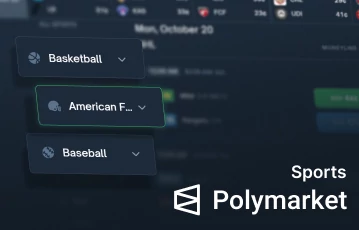
![polymarket pbt sports]()
Sports predictions made simple at Polymarket
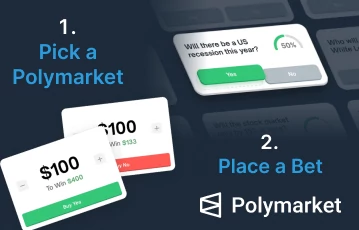
![polymarket how to play 1]()
Sports predictions made easy at Polymarket
Are There Fees Attached to Trading on Polymarket Odds?
We have a comprehensive guide on
Polymarket fees
that you can go through to learn about any extra charges on the platform. However, to give you an overview, Polymarket uses a maker-taker fee structure where "takers" executing immediate market orders pay dynamic fees based on the market category and outcome probability. In contrast, "makers" who add liquidity by placing limit orders incur zero trading fees and can even earn rebates.
The platform functions as a peer-to-peer exchange rather than a traditional bookmaker, meaning it doesn’t profit from a bid-ask spread. Instead, the platform collects dynamic taker fees from market orders to maintain operations and fund the maker rebate program, which incentivises deeper liquidity and tighter spreads.
Common Mistakes to Avoid When Reading Polymarket Odds
Here are some common mistakes we've seen users make, along with how you can avoid them:
- Misinterpreting prices for certainty:
A 70% price means a 70% chance of an event occurring, not a certainty. There's still a 30% chance that the event will not happen.
- Failing to monitor market volatility:
Prices on Polymarket can shift quickly with new information or trading activity. So, treat the odds as fluid amounts that can rise or fall sharply, especially during fast-moving events.
- Buying more event contracts than you intended:
If you’re new to
prediction markets, start with fewer positions. Ensure you have a budget and do not use more than the intended amount when trading.
Hits and Misses of "odds" on Polymarket
The following are the pros and cons of the pricing at Polymarket:
Pros and Cons
- Simple format that's easy to understand
- No traditional sportsbook margins
- Zero fees and available rebates for limit order makers
- Transparent pricing shows true market sentiment
- Dynamic trading fees apply to market order takers
Final Thoughts on Polymarket Odds
With this guide, you know exactly what to expect whenever you hear “Polymarket odds”. To recap, these are numbers that show you the price of every contract, as well as the probability of that event happening.
These prices also change based on market sentiment, supply and demand dynamics, and liquidity providers. So, when you place an order, it’s important to keep an eye on the price to know if it rises or falls. This way, you can choose to lock in a profit early by selling your shares, or hold your position until the event resolves to see if your prediction is accurate. If you feel ready to start trading on Polymarket, you can do so by clicking the links featured on this page.
Polymarket Odds FAQs
🔄 What Is the Relationship Between Odds, Probability, and Prices on Polymarket?
"Probability" and "prices" are the more common terms you will come across when using Polymarket. While these sound like two distinct things, they actually mean the same thing as odds, but expressed differently.
📈 Are Polymarket Odds Fixed?
No, the numbers on Polymarket are not fixed. They change based on factors such as market sentiments.
⚖️ Are Polymarket Odds Fair?
Yes, they are. These prices are considered fair because they are influenced by market factors, including users' trading activities.


 Available with Dimers Pro