Jun 26, 2026
World Cup player props today: Friday's group stage props include Abu Al Shamat [6/26/2026]
Read Article 
Why "it's called soccer" is expected to be a major topic of conversation among fans at the 2026 World Cup.
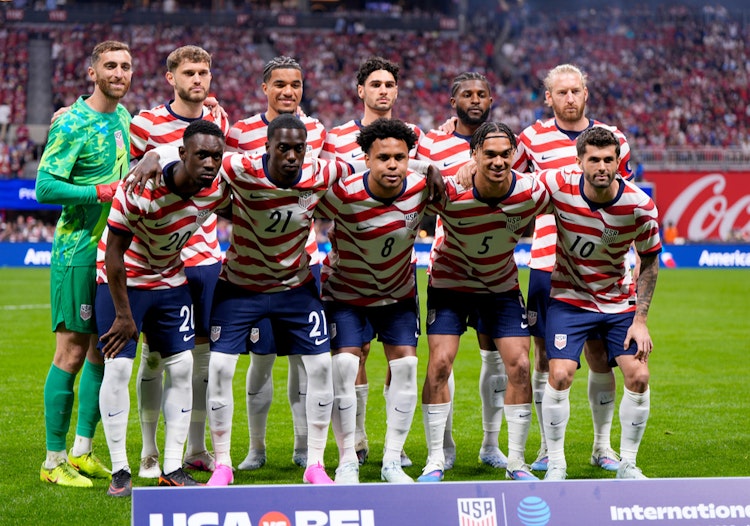
As the heat of June 2026 descends upon North America, the air is thick with more than just humidity. In the bars of Atlanta, the fan zones of Mexico City, and the transit hubs of Toronto, a century-old linguistic war is about to be reignited. For fans of the 45 visiting nations, they are preparing to arrive for a second World Cup on North American shores. To those in the United States, the biggest ever "Summer of Soccer" is about to begin.
The "Soccer vs. Football" debate is the ultimate low-hanging fruit on platforms such as Reddit and Twitter/X, but as the U.S. co-hosts the largest tournament in history, the narrative has shifted from a quirky Americanism to a defiant badge of cultural identity.
The great irony of the "It's called soccer" chant—often screamed by Americans to needle visiting Europeans—is that the word itself is a British export. In the late 19th century, England was a chaotic mess of "football" codes. To distinguish between them, students at Oxford University used slang to shorten the names.
While the UK eventually pivoted back to "football" to distance itself from American influence in the late 20th century, the U.S. stayed the course. Why? Because by the time Association Football gained a foothold in the States, "Gridiron" had already claimed the "football" throne. In a land of NFL giants, calling the beautiful game "soccer" wasn't an insult; it was a necessity for clarity.
RELATED: How to bet on World Cup 2026
For veteran fans, this summer feels like deja vu. In 1994, the U.S. hosted a Men's World Cup that still holds the record for total attendance. The world expected a permanent boon—a moment where the sport would finally leapfrog the likes of the NHL or MLB.
Instead, once Brazil hoisted the trophy at the Rose Bowl after that infamous 1994 penalty shootout against Italy, the circus left town. The NFL reclaimed the headlines, and the newly formed Major League Soccer (MLS) struggled through a decade of niche status.
With 48 teams and 104 matches, the 2026 World Cup is a statistical minefield. The traditional eye test isn't enough to determine who will win the World Cup when you have an expanded bracket and grueling travel schedules across three countries.
This is where the American sporting culture’s obsession with "Moneyball" stats meets the global game. Modern fans are moving away from gut feelings and toward high-level 2026 World Cup predictions powered by predictive analytics.
If you’re looking to get an edge on your World Cup bets, the smart money is on Dimers Pro. By leveraging world-class predictive analytics and thousands of match simulations, Dimers Pro cuts through the "Soccer vs. Football" noise to provide cold, hard probabilities. Whether it’s assessing Brazil’s depth or the USMNT’s chances of a deep run on home soil, data is the new universal language of the game.
Unlike 1994, soccer doesn't need to "arrive" in America—it's already here. The youth participation numbers are staggering, and the cultural footprint is permanent. Whether you call it football or soccer, the 2026 World Cup is less about introducing a sport to a new audience and more about a superpower finally embracing its seat at the table.
So, when the "It's called soccer" chants start echoing through the stadiums this summer, don't be offended. It's just the sound of a host nation that finally knows exactly who it is.


Nick Slade, with nearly two decades of experience, is the Chief Content Officer at Cipher Sports Technology Group, overseeing content for Dimers. He specializes in soccer, NBA, and NHL betting, leveraging predictive analytics and machine learning to provide accurate betting insights.