Some of the
best online casinos
use three main tools to keep your data safe: encryption, strict payment handling rules, and outside audits.
| Security layer | What it does | Who requires or checks it? |
| SSL/TLS encryption | Scrambles personal data while it moves between your device and the casino | Ontario operators must meet AGCO security and data protection standards |
| PCI DSS compliance | Sets rules for storing, sending, and protecting card details | Card networks such as Visa and Mastercard require it through the payment industry |
| Access controls | Limits who can open sensitive customer records | iGaming Ontario requires operators to protect personal information and restrict access |
| Independent technology testing | Checks critical gaming technology before it goes live | AGCO-registered independent testing labs certify covered gaming technology |
When you send your name, password, payment details, or ID through a secure casino page, HTTPS and TLS can scramble that information while it travels across the internet.
That means anyone trying to grab the information in the middle will not see a neat copy of what you typed. They will see encrypted data instead. Payment data gets its own separate rulebook, called PCI DSS (that stands for Payment Card Industry Data Security Standard, a mouthful, but worth knowing).
This standard comes straight from the card networks themselves and even
minimum deposit casinos
with starting amounts around $10 still use payment systems that need to follow card security rules.
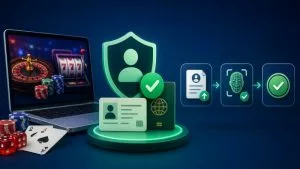
A regulated casino may ask for your legal name, date of birth, home address, phone number, and email when you register. Later, an identity check may ask for a driver's license, passport, ID, or another document. This information helps the casino confirm that you are the person opening the account. It can also confirm your age and help stop duplicate accounts or identity fraud.
Some operators may ask for more information when an account needs another check. That could include proof of address or extra payment details. This usually only happens if your first round of details needs a second look, maybe your address didn't match public records cleanly, or a payment method needs extra confirmation.
It's not a sign anything went wrong. Regulators require every licensed casino to confirm who's behind an account, a process usually called KYC, short for Know Your Customer. If a casino skips this step, it risks its own license.
What Can You Do to Protect Your Casino Account?
Use a password that you do not use on another account. If two-step verification is offered, turn it on. Also, avoid sending IDs or account details through random links in messages. Open the casino through your normal bookmark or browser, sign in, and use the secure upload area inside your account.
Check emails carefully too as a fake support message may copy the casino logo and ask you to log in through a false page. If a message asks for your password, full card details, or a two-step login code, stop and contact the casino through its official support page.
Pros and Cons of Regulated Casino Data Protection
Here's where these protections help you, and where a few rough edges still show up.
Pros and Cons
- Encryption protects data in transit
- Card data follows strict PCI rules
- Staff access can be limited
- Verification can take extra time
Handing over your details to a licensed casino isn't the leap of faith it might feel like at first. Encryption scrambles your data the second it leaves your device, payment networks force strict handling rules on anything touching a card number, and outside auditors check the whole system on a real schedule.
Whether you're new to signing up at a licensed casino or you've done it a dozen times before, the same protections apply every single time, encryption, audits, and a regulator standing behind the whole process. Click our on-page banners for casinos we trust to handle your information the right way.
They commonly use tools such as HTTPS encryption, secure ID checks, payment tokenization, two-step login, and limits on who can access user records.
🔐 How Can I Tell If a Casino's Connection Is Actually Encrypted?
Look for a small padlock icon next to the web address in your browser. That icon means an encrypted connection is active right then.
💳 Does the Casino Keep My Full Card Number?
Not always. Many payment systems use tokenization, which replaces the card number with a secure code. The exact setup depends on the casino and payment company.
Gamble Responsibly
Playing at online sportsbooks, real money casinos, and sweepstakes sites should always be safe and enjoyable. Keep control of your activity by following
responsible gambling
guidelines such as:
Set a Budget:
Decide on a budget you’re comfortable with and stick to it. Once it’s gone, stop playing.
Don’t Chase Losses:
Trying to recover losses often leads to overspending.
Play with a Clear Head:
Avoid playing under the influence, or when angry, stressed, or tired.
Set Time Limits:
Take breaks and ensure gambling doesn’t cut into time with family or friends.
Know Your Stuff:
Learn the rules, bet types, odds, and payouts before playing to avoid mistakes.
Make use of features like budget limits and self-exclusion.
If you or someone you know is struggling to gamble responsibly, these free, confidential resources can help:
Advertiser disclosure


 Available with Dimers Pro