Sep 30, 2026
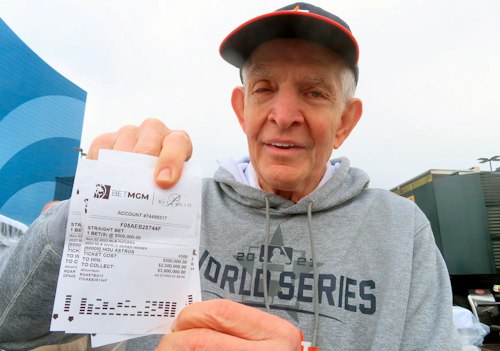
Mattress Mack turns to Kalshi for $13M Astros bet
Read Article 
A small survey offers an intriguing snapshot of college betting behavior.
A small survey of University of Louisville students has offered an intriguing snapshot of sports betting on a college campus, with nearly three-quarters of the bettors surveyed saying they had wagered more money than originally planned.
Of 150 students surveyed in person, 47 said they had placed a sports bet. Among those bettors, 34, or approximately 72%, said they had bet more than intended, while 19 said they had placed another bet in an attempt to break even after losing.
The findings, first reported by student newspaper The Louisville Cardinal, come with significant limitations. The survey was not a random sample, included only 47 sports bettors, and was heavily weighted toward men, meaning its results should not be considered representative of University of Louisville students or college students more broadly.
Despite the small sample, the responses provide an insight into how some students are engaging with sports betting.
One respondent reported using gambling winnings to help pay tuition and Greek life dues. At the other extreme, another student claimed to have lost $20,000 in a single day.
Those individual claims were self-reported and were not independently verified.
Meanwhile, 19 of the 47 sports bettors, approximately 40%, said they had responded to a loss by betting again in an attempt to break even.
Glenn Sterner III, a University of Kentucky researcher who studies gambling behavior, cautioned that gambling itself does not necessarily indicate someone has a problem.
"Not everybody that gambles is gonna end up having problems," Sterner said.
However, he said repeated betting can sometimes be driven by an attempt to recover previous financial losses.
The survey also found a notable difference between respondents involved in Greek life and other students.
Among 34 Greek-affiliated respondents, 29 said they had participated in some form of gambling, while 47% reported sports betting specifically. Among students outside Greek life, approximately 38% reported gambling and 27% said they had bet on sports.
One fraternity member even claimed that all approximately 130 members of his chapter gambled, although that assertion was not independently verified.
The survey does not establish any causal relationship between Greek life and gambling. Sterner noted that gambling can, however, become a social activity involving friends and exposure to different forms of betting.
Exposure to gambling extended well beyond the students who said they actually bet.
Of all 150 respondents, 123, or 82%, said they encountered gambling advertising every day.
Perhaps more notably, none of the 150 students surveyed said they were aware of University of Louisville resources specifically addressing problem gambling.
The Louisville Cardinal's Victoria Mastin conducted the survey, approaching students individually at Ekstrom Library and the Student Activities Center.
Of the 150 respondents, 120 were men and 30 were women. The non-random sampling and relatively small number of sports bettors create limitations that mean the results are best viewed as a snapshot of the experiences reported by this particular group rather than evidence of broader college sports betting behavior.


Damien Souness is Chief Experience Officer at Cipher Sports Technology Group, helping lead sports media brands such as Dimers. He specializes in creating trustworthy and data-driven content for sports fans, with experience working for globally recognized sports and media organizations.