Nov 17, 2026
Louisiana vs. prediction markets: What happens next?
Read Article 
Blockchain promises greater transparency for online slots, but does it actually make games fairer?
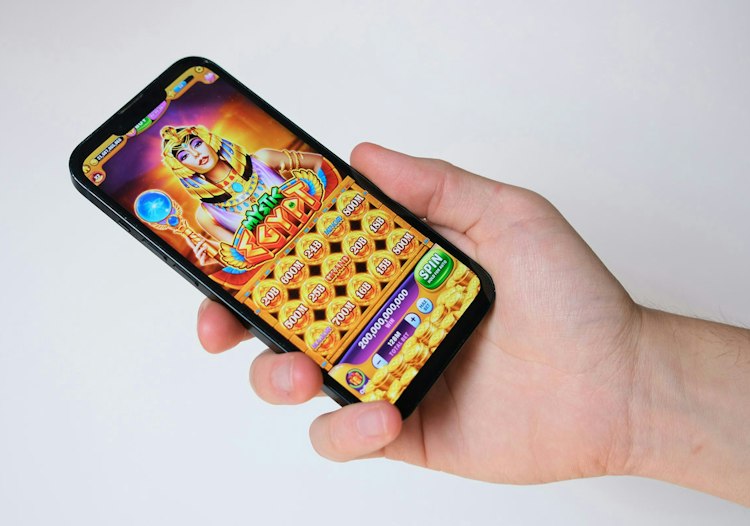
Online slots have come a long way, but one key question remains: how can players be sure that the games they're playing are fair?
Traditional online slots rely on random number generators (RNGs) to determine outcomes. While licensed operators in regulated markets are generally required to meet strict testing standards, players typically have limited ability to independently verify the result of an individual spin.
Blockchain technology offers a potential alternative. By combining transparent recordkeeping with cryptographic verification, it could provide players greater visibility into how certain online casino games operate.
But does blockchain actually make online slots fairer, or does it simply offer another way to establish trust?
At the heart of every online slot is a random number generator (RNG), which determines the outcome of each spin.
In regulated markets, RNGs are typically subject to independent testing to ensure outcomes are sufficiently random and consistent with the game's advertised rules. Operators may also be required to disclose return-to-player (RTP) percentages, which represent the theoretical proportion of wagers a game returns over a large number of spins.
However, these safeguards don't necessarily provide players with direct insight into how an individual result was generated.
Most traditional online slots operate through centralized systems controlled by casino operators and software providers. Players generally cannot inspect the underlying RNG code or independently reproduce their results.
Instead, they rely on regulatory oversight, independent testing laboratories, and the reputation of the operator.
That doesn't mean traditional slots are rigged. Properly regulated games must meet established standards, and the house edge is built into the mathematical design rather than requiring manipulation of individual outcomes.
Nevertheless, there is a meaningful distinction between trusting that a game has been independently tested and being able to verify a result yourself.
That's where blockchain-related technology enters the conversation.
Blockchain is a decentralized digital ledger that records information across a network of computers. Once transactions are confirmed, it becomes extremely difficult to alter those records.
In online gambling, blockchain can provide an additional layer of transparency by creating records of transactions, outcomes, or other game-related information that can be independently inspected.
One of the most relevant developments is the concept of provably fair gaming.
Provably fair systems use cryptographic techniques to allow players to verify whether a game outcome was generated according to a predetermined process.
A typical system works as follows:
Importantly, provably fair technology does not require a blockchain. These cryptographic processes can operate independently, although blockchain may provide a tamper-resistant public record of commitments or transactions.
There are also limits to what verification establishes.
A successfully verified outcome does not automatically prove that the original inputs were generated impartially, that the game's payout structure is fair, or that the operator will honor withdrawals.
It provides evidence about a specific part of the gaming process, rather than a blanket guarantee of fairness.
Transparency is arguably blockchain's most relevant application in online gambling, but the technology could support other changes.
Blockchain-based payment systems can allow users to independently inspect confirmed transactions on a public ledger.
This could make certain deposits, withdrawals, or prize distributions easier to track, depending on how the casino operates.
However, using cryptocurrency does not automatically mean a casino operates transparently. Some slot casinos with crypto deposits still rely on centralized systems for gameplay, account balances, and withdrawals.
Players may therefore see cryptocurrency transfers but gain no additional insight into how games operate.
Smart contracts are programs that execute predetermined instructions when specified conditions are met.
In theory, they could automate aspects of casino operations, such as distributing winnings or managing prize pools, reducing the need for manual intervention.
However, these systems depend on correctly written code, reliable inputs, and appropriate security measures. Vulnerabilities or errors can expose funds to additional risks.
Blockchain could also support new forms of digital ownership through tokenized assets and non-fungible tokens (NFTs).
Developers might use these systems to create transferable collectibles, digital rewards, or gaming experiences that connect multiple platforms.
More speculative applications include virtual casino environments where players interact through digital identities and blockchain-based assets.
While these concepts demonstrate the technology's potential, their long-term appeal and practical value remain uncertain.
Despite its potential, blockchain introduces challenges that operators, regulators, and players need to consider.
There is also an important distinction between technological transparency and financial fairness.
Even when every spin can be independently verified, slot games can still carry a substantial house edge. A transparent game isn't necessarily a better-value game, and verifiable randomness doesn't improve a player's expected return.
Similarly, cryptocurrency transactions may be difficult or impossible to reverse, while the value of the cryptocurrency itself can fluctuate independently of gambling outcomes.
These risks remain relevant regardless of how transparent the underlying technology becomes.
Blockchain has the potential to change how certain online slots establish and demonstrate trust, particularly through transparent records and independently verifiable outcomes.
It could also support innovative applications involving smart contracts, digital ownership, and automated transactions.
But widespread adoption is far from guaranteed.
For blockchain-based slots to offer a meaningful improvement over existing systems, operators must demonstrate that the technology delivers practical benefits beyond simply accepting cryptocurrency.
That means clearly explaining game mechanics, publishing verifiable information, maintaining strong security standards, and complying with gambling regulations.
Independent testing and responsible gambling safeguards remain essential, regardless of the technology used.
Ultimately, blockchain's most valuable contribution to online slots may be improving existing gaming experiences. It may be giving players a better way to understand and verify the games that already exist.
The technology can help make certain outcomes more transparent. Whether that translates into greater trust, stronger protections, and a better experience for players will depend on how operators put it to use.

Dimers Staff represents the editorial and product teams at Dimers. Content published under this byline includes company announcements, product updates, educational resources, and articles developed collaboratively by multiple team members.