Oct 8, 2026
Why Kalshi is dividing Native American tribes over prediction markets
Read Article 
Coinbase will stop offering sports event contracts in Michigan on October 10.

Coinbase will stop offering sports prediction market contracts in Michigan this week, becoming the latest company to retreat from the state amid an escalating legal battle over whether sports event contracts constitute illegal gambling.
Coinbase Financial Markets has agreed to stop offering new sports-related event contracts to Michigan customers by 12 AM ET on October 10 and close out all remaining customer positions by the same deadline, the Michigan Gaming Control Board (MGCB) announced Wednesday.
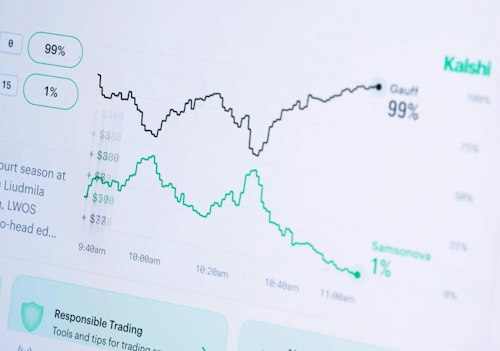
The agreement means Michigan has now secured agreements or court orders stopping sports event contracts offered through Coinbase, Robinhood, and Kalshi, strengthening the state's position in one of the most consequential regulatory battles facing prediction markets.
Coinbase's agreement covers sports event contracts traded on Kalshi and other designated contract markets.
In exchange for Coinbase complying with the agreement, Michigan has agreed not to pursue enforcement action against the company while related litigation continues.
The arrangement does not settle the larger question at the heart of the dispute: whether states such as Michigan have the authority to regulate federally registered event contracts as gambling.
"Coinbase joining Robinhood and Kalshi in stepping back from these unlicensed sports contracts underscores Michigan's commitment to enforcing its gaming laws," MGCB Executive Director Henry Williams said.
"Operators are halting these activities because they face significant legal consequences for continuing to offer them in our state."
Michigan Attorney General Dana Nessel was similarly emphatic, describing companies offering the contracts as part of the "illegal sports betting industry."
"Michigan gaming law is simple and clear, and written to keep gaming in our state fair and well-regulated," Nessel said. "Whether by agreement or court order, we intend to bring all sports betting into compliance with the law."
The Coinbase agreement follows a nearly identical arrangement between Michigan and Robinhood, while the state has also obtained a preliminary injunction against Kalshi.
Coinbase had sought its own preliminary injunction against Michigan, but a court denied that request in August. Its appeal is pending before the US Court of Appeals for the Sixth Circuit, although proceedings have been stayed pending the resolution of related appeals involving Robinhood, Polymarket, and Kalshi.
Those cases could ultimately have implications far beyond Michigan.
Prediction market operators have argued that event contracts offered through federally regulated exchanges fall under the jurisdiction of the Commodity Futures Trading Commission, while a growing number of state gaming regulators contend that sports contracts amount to wagering and therefore remain subject to state gambling laws.
The Michigan agreements preserve the companies' legal arguments while removing the sports products from the state as that broader dispute continues through the courts.
"Michigan is becoming an important test case for the prediction market industry because the state isn't waiting for the broader legal debate to be resolved," said Adam Fiske, CEO of Cipher Sports Technology Group, the parent company of Dimers.
Cipher works with both sportsbooks and prediction markets across the US, including as a licensed sports betting affiliate in Michigan.
"Whatever you call these products, they're competing for the same sports customer and increasingly facing the same regulatory questions as traditional sportsbooks," Fiske added. "If other states achieve similar outcomes, the ability to offer sports contracts nationwide could become much more difficult."
The MGCB is scheduled to hold its next regular meeting on October 13, three days after Coinbase's deadline to withdraw its sports event contracts from the state.
The meeting will cover the implementation, administration, and enforcement of Michigan's casino gaming, online gambling, and sports betting laws, although the Board's announcement did not specifically state that prediction markets or Coinbase will be on the agenda.
The bigger development will come through the courts.
The Coinbase agreement preserves the rights and defenses of both sides pending a final ruling from the Sixth Circuit or potentially the US Supreme Court, meaning the company could ultimately return to sports event contracts in Michigan if the courts determine federal commodities law prevents the state from regulating them as gambling.
For now, however, Michigan has succeeded in removing sports event contracts offered through three of the most prominent companies involved in the rapidly growing market.


Damien Souness is Chief Experience Officer at Cipher Sports Technology Group, helping lead sports media brands such as Dimers. He specializes in creating trustworthy and data-driven content for sports fans, with experience working for globally recognized sports and media organizations.