Polymarket is a popular market site that caters to a global user base, though it strictly restricts access for residents inside the United States. As a prediction market, Polymarket allows members to buy, sell, and trade event contracts on sports, politics and more. Currently, trading fees apply to the majority of market categories.
Typically, you'll have to pay a commission for trading contracts, and Polymarket now uses a dynamic fee model for taker orders on its platform. There’s no fee for opening or maintaining an account, although you may encounter fees when making deposits and withdrawals. Let’s take a closer look at what this means for your trading.
Pros and Cons of Polymarket
Pros and Cons
- Fee-free Geopolitical & World Event markets
- Easily manage funds
- Deposit with crypto directly
- Supports deposit exchanges
- Updated taker fees for Politics, Finance, and Sports
What Is Polymarket and How Does It Work?
Polymarket is a
prediction market site
which offers members the chance to buy and sell ‘Yes’ or ‘No’ contracts on a selection of events. Contracts that prove to be correct are paid out at $1 each and incorrect contracts settle at $0.
So, for example, a ‘Yes’ outcome trading at a price of $0.40 per contract means there’s an approximately 40% chance of that event happening. If the event then does take place, each ‘Yes’ contract will settle at a price of $1 each, netting you $0.60 in profit for each contract. If your contract proves to be incorrect, and the event doesn’t happen, then each contract settles at $0, meaning you lose your $0.40.
- Example market event:
Will the Dodgers win the World Series? You purchase 10 ‘Yes’ contracts at a price of $0.58 each, totalling $5.80. The Dodgers do win and you pocket $1 for each contract, giving you $4.20 in profit.
It’s also possible to exit your pick early. Let’s say you’ve backed a ‘Yes’ contract that’s gained in value since purchase from $0.40 to $0.70. You decide to sell your contracts and make a profit of $0.30 on each one.
Are There Any Polymarket Trading Fees?
Yes, Polymarket does charge trading fees on certain categories. While Geopolitical and World Event markets stay entirely free to trade, almost all other categories, including Politics, Finance, and
sports prediction markets, are subject to these costs following a platform-wide fee expansion.
The fee relies on a dedicated formula for taker orders, hitting a maximum rate of 0.75% for sports when a match or outcome is an even 50/50 split. Only takers pay fees on completed transactions, while makers can actually earn money back through the Maker Rebates Program. Users can check the precise cost of any position before buying by reviewing the order confirmation window inside the trading dashboard.
Other Polymarket Fees and Costs - Spread and Slippage
Spread and slippage are two other factors that you’ll have to take into consideration when using Polymarket. Spread is the difference between the best buying price and the best selling price. For example:
More popular events, such as the US Presidential outcome, tend to have tighter spreads, since higher trading volume generally narrows the gap between buy and sell prices.
Polymarket sports event contracts
are considered mid-market for liquidity, so spreads there tend to run wider than in the busiest political markets.
- The closer the spread is to zero, the more liquid the market, creating a more stable trading environment.
Slippage
Slippage refers to the difference between the expected price of a contract and the actual price at which a trade is made. For example, you buy 1000 ‘Yes’ contracts on a sports event at $0.50 each using a market order with $250 liquidity. The first 500 fill at $0.50 but the remaining 500 fill at $0.51, making the total price more than you may have expected.
You can minimise slippage by opting for high liquidity markets, that is, ones with lots of market participation. Or, you can split larger orders up into smaller pieces.
![polymarket crypto]()
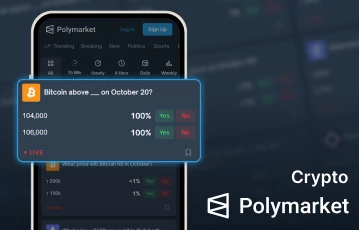
Trade the crypto market with ease at Polymarket
![polymarket mobile app]()
Download Polymarket mobile app
Are There Any Banking Fees at Polymarket?
Polymarket itself does not charge any banking, deposit, or withdrawal fees, though taker fees do now apply to certain trading categories. The platform handles all transactions using pUSD, which is a digital stablecoin tied directly to the US dollar that operates on the Polygon blockchain network. Polygon serves as a secondary layer to Ethereum, ensuring your transfers remain both rapid and auditable.
You can easily fund your profile by connecting a Coinbase account or by sending supported digital assets straight from a personal crypto wallet. Because transactions happen on-chain, you will occasionally encounter small blockchain gas fees to process your transfers, which can rise slightly when the network is highly congested. Also, while Polymarket won't take a cut when you move your pUSD, external services like MoonPay, Robinhood Connect, or Coinbase may still impose their own processing or conversion fees.
How to Withdraw Funds from Polymarket
You can withdraw funds from Polymarket without fees and the process is straightforward. We’ve gone into more detail on this in our
Polymarket review
— it’s essential reading for anyone looking to sign up. There are no fees to deposit or withdraw using pUSD (USDC on Polygon) but other services, like MoonPay, may charge you a fee.
Conclusion - Be Clear on Polymarket Fees Before You Sign Up
At the time of writing this guide, taker fees are payable on most contract categories, while Geopolitical options remain free. This reflects the platform's updated model designed to scale liquidity, meaning you should factor these variable percentages into your trading. There are also no fees for opening or running your account, but you might have to pay banking fees depending on the third-party method you choose.
As well as these fees, it’s important to consider spread and slippage and the type of trade you’re making. Each event contract comes with its own fee profile, which should be analysed before you trade. You can read more of our guides on getting started at Polymarket, from a look at sports markets to an exploration of
Polymarket election event contracts, right here on our site. They’re a great place to start for beginners and have lots of useful information. But if you feel ready exploring Polymarket prediction markets, you can start by creating an account using the banners on this page.
Polymarket Fees FAQ
❓ How Does the Polymarket Fee Structure Work?
Polymarket charges variable taker fees across key event spaces like Sports, Finance, and Politics while keeping Geopolitical segments free. Traders can see their exact potential cost within the user interface before finalizing any order.
🎁 Does Polymarket Have Any Bonuses for Users?
One of the most interesting features about Polymarket is the rewards available, accessible whether you’re using the desktop site or the
Polymarket app. These rewards encourage users to increase liquidity on the site and make the trading experience better for everyone. Even better, they’re available every single day.
💵 Do You Have to Pay Polymarket Deposit Fees?
Polymarket is a crypto-focused site and uses the Polygon blockchain. Depending on the method you use to deposit funds to your account, you may have to pay some network fees or other charges imposed by your provider. These will vary by method so it’s important to figure them into your calculations.


 Available with Dimers Pro