What Is Magic: The Gathering (MTG)?
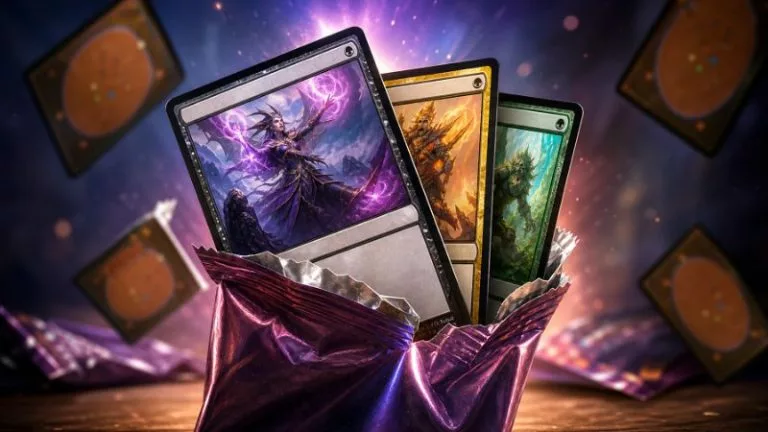
Magic: The Gathering, which is sometimes referred to as MTG or even just Magic, is a competitive card game. It was developed in 1993 by a mathematician named Richard Garfield, and published by Wizards of the Coast. Players can defeat their opponents by using cards that let them cast spells, use magical artifacts, and more.
The first release was known as the Limited Edition Alpha. The 1993 and 1994 cards were printed in much smaller numbers than later releases. As such, the cards from these early printings have become among the most valuable and sought-after cards, especially the 1993 Black Lotus. MTG’s popularity grew through the 1990s, as expansion sets such as Arabian Nights, Legends, and Antiquities were released. The 2000s became a turning point for collectors, as the sets introduced special artwork, borderless cards, foils, and other special characteristics of interest to collectors.
What Makes Physical and Digital Magic: The Gathering Cards Collectible and Valuable?
There are quite a few factors that affect the value of a card and how sought-after it is by collectors. Below you’ll find a quick overview of what makes MTG cards valuable. Take note that when we refer to digital cards, we mean virtual cards that are backed by a physical card. You’ll learn more about that just a bit later.
Game Utility
Since MTG is first and foremost a game of strategy, specific types of powerful cards tend to get snapped up by players. This drives the price up for both collectors and players.
Scarcity
The company that publishes MTG cards, Wizards of the Coast, has created a list of cards that they won’t reprint. When a card lands on the list, it can boost the card’s value.
There are other factors that can make a card scarce. The cards from the early 1990s are valuable because there were fewer cards printed as opposed to later years. In addition, older cards are harder to find in mint or near-mint condition, so those that survive in great shape tend to be more valuable.
Sometimes cards are printed where there are only one to three available in a set. There are cards that are even rarer, with only one card being found among multiple sets. Naturally, these cards are more valuable than the cards that have been mass produced.
Tournament Cards
Sometimes special cards are distributed during tournaments. These cards are in limited supply, which increases the value. Some collectors also like cards that have been played in major tournaments just for their historical significance.
Uniqueness
Many collectors appreciate factors that make cards unique, such as specific types of artwork, foils, and similar. One of the big draws for collectors is that the artwork tends to be beautiful and detailed on these cards.
What Are Digital Magic: The Gathering Cards?
The digital cards are virtual representations of the physical cards that you find on
digital card-rips
sites. Instead of ripping open a physical pack by hand to reveal a card, you watch an animation online to see which card you pulled. The key point to understand is that these digital cards are all backed by real, physical cards that are being stored safely in a vault. At least that’s the case with OpenThatPack. You’ll want to be careful about other sites, which may offer digital versions only with no physical card.
When you rip digital cards online, you generally have two main options. If you liked your pull, then you can have the physical card or graded slab sent to you through the mail. If you don’t want the card, then you can sell the card back to the website instantly right after you pull it. Some platforms also include marketplaces where you list an unwanted card for sale, or even purchase a specific card directly. This is one of the reasons we like using card-rips sites to help build our collections.
If you’ve looked at MTG card-rips websites, then you know some of them are a little sketchy. The sketchy sites aren’t fair and transparent. Sometimes collectors complain about “bait and switch” tactics, where they pull a digital card but the company ships a different, lower-value card to them.
When we were selecting our best platform, we looked at a variety of factors. First and foremost, the platform needs to be legit, fair and transparent. OpenThatPack absolutely meets that criteria. We also look at other factors such as:
- Pack variety: Some platforms only have two or three MTG packs. We like to see a nice selection so that collectors have plenty of options.
- Pack pricing: We prefer to see a variety of price points so that everyone from beginners who want entry-level pricing to advanced collectors have something that suits their needs.
- Bonuses: Active users should be rewarded. This is why we favor sites that offer loyalty rewards such as bonus packs, site credits, and other promos for users.
- Options: At a minimum, users should get the option to ship the card or sell it back to the site. Bonus points for sites that have a marketplace to list cards.
These are the main factors we look for, and OpenThatPack checks all the boxes. See for yourself:
OpenThatPack: Nice Selection of MTG Packs Available
OpenThatPack: Pros and Cons
- Easy-to-use website.
- Pokemon 30th Celebration packs.
- Below-retail pack prices.
- Multiple payment methods.
- Not many promotions.
- No sports TCG packs.
You can purchase 11 different packs on this platform, with pricing ranging from $16 to $70. The MTG packs include:
- Aetherdrift
- Duskmourn House of Horror
- Innistrad Remastered
- Bloomburrow
- Universes Beyond Assassins Creed
- Outlaws of Thunder Junction
- Ravnica Remastered
- Wilds of Eldraine
- Commander Masters
- March of the Machine
- Phyrexia All Will Be One
Once you pull a card, you can have it shipped to you, with cards being in near-mint condition. There aren’t any shipping charges for orders over $100. Orders with more than 50 cards incur a small bulk fee. You can sell unwanted cards back to the site. These funds aren’t withdrawable, but you can use them to purchase additional packs. Pokémon and Riftbound cards are also available on this site for collectors who enjoy other
trading card games.
Currently, there isn’t a welcome bonus available. Active users can collect daily packs, cashback bonuses, and site credits. Check the OpenThatPack banners on this page to learn more!
How to Start an MTG Card Collection
If you’re just getting started, a good place to begin is by checking out Magic: The Gathering card-rips platforms like the one mentioned above. This gives you a low-cost way to start collecting cards. As you get into the hobby and begin figuring out what types of cards you like the most, then you’ll want to develop a strategy so that you’re not buying packs, cases, boxes or cards that you don’t need.
Here are a few other tips:
Some people collect a little bit of everything, but that can be overwhelming. Others focus on one category. For example, they might seek to build complete sets. Others may focus on special characters or creatures. Some collectors may get cards from a certain era, such as the 1990s, the 2010s, or similar. Still others may focus on collecting cards from specific artists, or they seek foils, alternate artwork, or similar. And yes, some collectors are all building a collection of rare cards.
The above is not an exhaustive list of the approaches collectors take when building out their Magic collection. There is no right or wrong here, and you don’t need to decide right away. But once you’ve spent some time exploring the hobby, it’s a good idea to get clear about what types of cards you want to collect.
📅 Get organized right away
As soon as you start collecting MTG cards, you’ll want to catalog and organize your collection. Some collectors don’t do this since they only have a small collection at the beginning. But before you know it, your collection could take hours to sort, catalog and organize. Better to take a few minutes to take care of this task every time you get a card rather than procrastinating and turning it into a huge job later.
Here’s an extra tip: create a digital record or catalog of your cards with photos. That way, when you want to look at a specific card, you can look at the photo rather than pulling out the physical card. This helps protect your cards. The less they are handled, the less wear and tear they’ll show over time.
Most collectors don’t have trust funds, so you’ll want to set spending limits for yourself. You can set up weekly, monthly, or yearly limits. Be realistic, and pause your collecting activity once you reach that limit. For example, if you hit your weekly limit, then pause your card rips until next week. Meanwhile, you can take that time to admire what you’ve built so far, interact with other collectors, and learn more about your hobby.
🎁 Take advantage of promos
Most of the card-rips platforms offer bonuses, promos and rewards. Some of them offer welcome bonuses, which is great. Most of them offer ongoing rewards to active users. Don’t sleep on these promos. You can get bonus packs, discounted packs, no-sweat packs, buyback boosts, site credits, referral rewards, and more. These bonuses and promos can help you rip extra cards, or in some cases they provide insurance (such as with no-sweat packs).
🛡️ Store and handle cards correctly
Your collection might potentially increase in value over time, which is why you’ll want to take good care of it. Be sure to use rubber gloves to handle your cards so that you don’t get any oils or dirt on them. You’ll also want to place your cards in protective sleeves, and use double sleeves for your higher-value cards. If you have slabs in your collection, don’t break the cases for any reason. Be sure to store your collection in a cool, dry and dark place.
Pros and Cons
- Bonuses and rewards available.
- Varied price points.
- Ship cards or sell back to the site.
Final Thoughts on Digital Magic: The Gathering Cards
Whether you’re a new or seasoned collector, sites that offer card rips provide a good opportunity for you to build your collection. This is also an affordable option, as you get a chance to pull a card that you may not be able to afford if you purchased it outright. In addition, taking advantage of a site’s bonuses and promos can provide an opportunity to slightly lower the overall risk when ripping cards. Just be sure you develop a strategy for your collection so that you’re not purchasing packs on a whim.
To get started, all you have to do is check out the banners on this page to learn more. If a bonus is available, you’ll see that on our banners as well.
FAQs
💵 How Much Can You Sell Cards for When You Utilize the Instant Buyback Feature?
Many if not most card-rips sites let you instantly sell back any unwanted cards. The exact percentage varies by site, but it usually ranges from 85% to 100% of the market value of the card. Some sites set your percentage based on your level in the loyalty or VIP program. Other sites set a straight percentage. On other sites, the percentage varies by card, and/or if the site is running a buyback boost promo.
📦 What Are “sealed” MTG Collections?
Some collectors purchase unopened packs, boxes and cases, and they leave them sealed. Some do it simply because sealed items are collectible. Others do it for speculative reasons, as they hope the prices for these items go up in the future.
📪 Are All Digital Magic: The Gathering Cards Backed by a Physical Card That Can Be Shipped?
Not necessarily. Some sites only offer digital versions of a card, with no physical card in existence. You’ll want to be sure to examine any card-rips platform carefully to be sure that digital rips are backed by physical cards that you can have shipped to your home.
If you or someone you know is struggling to gamble responsibly, these free, confidential resources can help:

To make sure you get accurate and helpful information, this guide has been edited by
Jason Bevilacqua
as part of our fact-checking process.
Advertiser disclosure


 Available with Dimers Pro