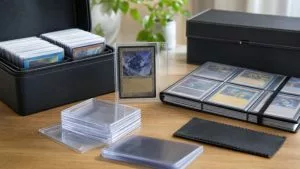
First Things First: How Does Card Grading Work?
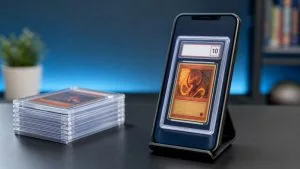
Card grading involves a third-party company assessing a physical trading card's authenticity and condition. Graders examine four main factors: centering, edges, surface and corners. The card is then assigned an overall grade and typically sealed inside a protective plastic holder called a slab.
If you open packs through
online card rips, professional grading can potentially increase the resale value of certain pulls, although a higher price isn't guaranteed. Graded cards also offer buyers an independent assessment of their condition, while the slab helps protect against handling damage.
PSA Vs BGS Vs CGC: A Side-By-Side Comparison
PSA, BGS and CGC are three of the best-known third-party grading companies among trading card collectors. While all three assess authenticity and condition, their grading scales, labels and approaches differ.
Here's a quick overview of what sets them apart before we look at each company in more detail:
| Key Details | PSA | BGS | CGC |
| Full name | Professional Sports Authenticator | Beckett Grading Services | Certified Guaranty Company |
| Grading scale | 1–10 | 1–10, including half-points | 1–10, including selected half-point grades |
| Subgrades | No | Available | No longer offered |
| Top grade | Gem Mint 10 | Pristine 10, including Black Label | Pristine 10 |
| Label style | Red and white | Black, gold or silver | Black and white, with gold for Pristine 10 |
| Slab design | Slim, classic holder | Thicker holder | Clear holder with modern label |
| Best suited to | Established resale recognition | Detailed grading feedback | Collectors who prefer CGC's grades and presentation |
One of the biggest differences is how grading information is presented. PSA and CGC provide an overall grade, while BGS offers subgrades for centering, corners, edges and surface. This gives collectors a more detailed look at how the card was assessed.
PSA: A Benchmark for Resale Recognition
PSA is arguably the most recognisable name in trading card grading. Founded in 1991, it's the oldest of the three companies and is widely used for sports cards, vintage collectibles and trading card games like Pokémon. Its highest grade is Gem Mint 10, which can attract a premium from collectors, particularly for rare or sought-after cards. PSA assigns one overall grade without subgrades, making its familiar red-label slabs easy for buyers to recognise and compare.
BGS: A Variety of Subgrades
Beckett Grading Services was founded in 1999 and is a great pick if you're looking for finer details about your card's condition. BGS offers subgrades for centering, corners, edges and surface, giving collectors a clearer picture of how the overall grade was determined.
A Pristine 10 typically comes with a gold label, while the coveted Black Label is reserved for cards that receive a perfect 10 across all four subgrades. It's one of the most desirable results for collectors chasing exceptional condition.
BGS is also known for its substantial slabs, although the larger holders may not appeal to everyone. Its detailed grading standards mean achieving a perfect Black Label is particularly difficult, making it a standout feature for collectors who value precision.
CGC: The Modern Choice
CGC built its reputation grading comics before expanding into trading cards, and it's become a recognised option for Pokémon and other TCG collectors. Unlike BGS, CGC no longer offers subgrades, but its grading scale distinguishes between Gem Mint 10 and the higher Pristine 10 designation.
Its clear slabs have a modern appearance, with a distinctive gold label for Pristine 10 cards. CGC is worth considering if presentation matters to you, although resale prices can differ from comparable PSA or BGS cards depending on collector demand.
What Grading Company Should You Pick?
The best grading company for you depends on what matters most, whether that's resale recognition, detailed grading feedback or how your cards look on display. Here are three things to consider before submitting.
📈 Grade for Resale Recognition
PSA is worth considering if you're planning to sell your cards. Its established reputation and recognisable slabs can appeal to collectors, particularly those buying vintage cards and valuable sports collectibles. However, a PSA grade doesn't guarantee a higher selling price, so check recent sales of comparable cards before deciding.
🎨 Grade for Presentation and Detail
BGS could be a great fit if you're collecting modern chase cards and want a more detailed breakdown of their condition. Its subgrades show how centering, corners, edges and surface contribute to the overall grade. The coveted Black Label 10 is another attraction for collectors chasing a perfect score.
🃏 Grade for Modern Collecting
CGC is another option worth exploring, particularly for Pokémon and other trading card games. Its grading scale distinguishes between Gem Mint 10 and Pristine 10, while its modern slab designs can appeal to collectors building personal displays. If pricing or turnaround times matter to you, compare its current services with PSA and BGS before submitting.
Closing Thoughts: Choosing Between PSA, BGS and CGC
Whether you've got some exciting pulls from
live card breaks
or from ripping packs yourself, professional grading can help authenticate your cards and provide an independent assessment of their condition. It may also improve their resale value, although this depends on the card, grade and collector demand.
Ultimately, choosing between PSA, BGS and CGC comes down to your priorities. PSA offers established resale recognition, BGS stands out for its detailed subgrades and coveted Black Label, while CGC appeals to collectors who appreciate its grading scale and presentation. Compare current fees, turnaround times and recent sales before submitting. If you'd rather collect cards that are already professionally graded, you can explore the digital rip sites featured in the promotional banners on this page.
FAQs
🤔 Which Is Better for Card Grading: PSA, BGS or CGC?
There's no single best choice for every collector. PSA is widely recognised in the resale market, BGS appeals to collectors who want detailed subgrades and the chance of a Black Label 10, while CGC is worth considering for its grading scale and slab presentation. Your choice depends on the cards you're grading and what matters most to you.
💰 Does Grading a Card Automatically Increase Its Value?
No. A high grade can increase resale value, but it isn't guaranteed. Rarity, collector demand, card condition and the grading company all influence what buyers are willing to pay. In some cases, a low grade can make a card worth less than a raw copy.
⏳ How Long Does PSA, BGS or CGC Grading Take?
Turnaround times vary depending on the company, service tier and current submission demand. Budget services can take several months, while faster options may return cards considerably sooner. Check each company's current estimates and remember to account for shipping time.
🏆 What's the Difference Between a PSA 10 and a BGS Black Label 10?
A PSA Gem Mint 10 is PSA's highest grade, awarded to cards meeting its Gem Mint standards. A BGS Black Label 10 requires perfect scores of 10 for centering, corners, edges and surface. Both are desirable grades, but they follow different grading criteria and shouldn't be treated as identical.
🃏 Does CGC Offer Subgrades Like BGS?
No. CGC no longer offers subgrades for trading cards. It assigns an overall grade and distinguishes between Gem Mint 10 and its higher Pristine 10 designation. BGS offers individual subgrades for centering, corners, edges and surface.
If you or someone you know is struggling to gamble responsibly, these free, confidential resources can help:

To make sure you get accurate and helpful information, this guide has been edited by
Jason Bevilacqua
as part of our fact-checking process.
Advertiser disclosure


 Available with Dimers Pro