Oct 15, 2026
What are digital rips? How online sports card packs work
Read Article 
The leagues' new responsible gaming campaign puts sports betting and prediction markets under the same spotlight.

The NBA and WNBA are launching a new responsible gaming campaign with a message for sports fans: whether you're placing a bet or trading on a prediction market, your money is still at risk.
Announced October 13 in partnership with the National Council on Problem Gambling (NCPG), the initiative will focus particularly on young adults and the potential financial, emotional, and social consequences of gambling-related activities.
The campaign will launch during the 2026-27 NBA season, with advertising distributed across NBA- and WNBA-owned channels, social media, and broadcast partners.
But beyond the responsible gaming message, the announcement highlights an increasingly important distinction for bettors: sports prediction markets may operate under different regulations than sportsbooks, but that doesn't mean they carry different financial risks.
Prediction markets have become an increasingly prominent part of the sports landscape, allowing customers to buy and sell contracts tied to sporting outcomes.
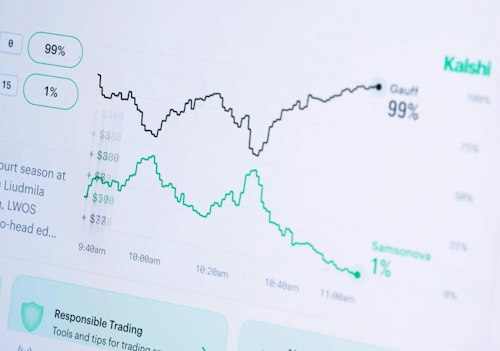
Unlike traditional sportsbooks, platforms such as Kalshi operate through federally regulated financial exchanges rather than state-licensed gambling frameworks.
That regulatory distinction has become the subject of legal disputes across the United States.
But the NBA and WNBA are making a simpler point: the potential harm to fans doesn't disappear because an activity is described as trading rather than betting.
According to the leagues, both activities can create financial problems and affect mental well-being, friendships, and family relationships when participation becomes difficult to control.
The campaign will also challenge the idea that extensive sports knowledge necessarily translates into financial success.
Fans may understand teams, players, and matchups better than most, but that doesn't guarantee they'll make money from predicting outcomes.
"As the ways people engage with sports continue to evolve, it is important that fans understand the risks associated with putting money on sports outcomes," said Scott Kaufman-Ross, NBA Head of Media Distribution and Partnerships.
"Through this campaign, we want to help fans make informed decisions, understand the risk and, if they choose to bet, trade or anything similar, that they do so responsibly."
For fans considering sports prediction markets, the campaign reinforces several principles that apply equally to traditional betting.
Understanding the sport is only one part of evaluating a wager or contract. The price paid, the probability of an outcome, and the possibility of losing money all matter.
A prediction can be correct more often than not and still be unprofitable if the prices paid are too high.
Likewise, the ability to trade contracts before an event finishes doesn't eliminate the possibility of losses.
The NBA and WNBA want fans to set limits on spending and time, avoid risking money they cannot afford to lose, and recognize when participation is becoming difficult to manage.
These principles are particularly relevant as prediction markets attract audiences who may not previously have participated in traditional sports betting.
Regardless of the platform, customers should understand how a product works, what they stand to lose, and whether their participation remains within limits they can comfortably afford.
The NBA and WNBA's warning about sports knowledge is particularly relevant in an industry where predictions, statistics, and increasingly sophisticated models are readily available.
At Dimers, our approach is to help bettors make more informed decisions by providing data-driven predictions, probabilities, and tools to evaluate betting opportunities.
But there's an important distinction between making an informed decision and making a winning bet.
Even a team with a 70% chance of winning will lose approximately three times in every 10 games over the long run. And identifying the most likely winner doesn't necessarily mean the available odds represent good value.
That's why understanding probabilities, comparing prices, and recognizing uncertainty are essential parts of responsible betting.
No model can eliminate risk, and no amount of research guarantees a profit.
The new initiative builds on the NBA's existing relationship with the NCPG and extends its responsible gaming messaging to WNBA audiences.
"Helping our fans make informed decisions is central to this effort," said Colie Edison, WNBA Chief Growth Officer.
"By bringing this campaign to WNBA audiences, we can reach more fans with practical guidance on understanding financial risk, setting limits and recognizing when and where to find support."
The campaign will include a new advertising spot, although the leagues have not yet announced its creative details or exact debut date.
Derek Longmeier, President of the NCPG Board of Directors, welcomed the initiative, emphasizing the importance of education and awareness in preventing gambling-related harm.
Fans will be directed to responsible gaming resources, including guidance on recognizing problematic behavior and seeking assistance.
The announcement comes as professional sports leagues increasingly grapple with how prediction markets should fit into the existing sports betting landscape.
NBA Commissioner Adam Silver recently called for greater access to prediction market trading data to help identify insider activity and protect game integrity.
The NFL has also raised concerns about sports prediction markets, particularly around age restrictions and contracts vulnerable to manipulation.
Those debates focus largely on regulation and integrity. The NBA and WNBA's latest campaign adds another dimension: the risks faced by the people actually putting money on sporting outcomes.
For bettors, that distinction matters.
Whether a sports contract is classified as a financial product or a gambling product, customers still need to understand the risks, the prices they're paying, and the possibility of losing their money.
The terminology may change. The need for responsible participation does not.
Dimers provides responsible gaming resources to help bettors make informed decisions. Anyone concerned about their own gambling or someone else's can call or text the National Problem Gambling Helpline at 1-800-MY-RESET for free, confidential support, available 24/7.


Damien Souness is Chief Experience Officer at Cipher Sports Technology Group, helping lead sports media brands such as Dimers. He specializes in creating trustworthy and data-driven content for sports fans, with experience working for globally recognized sports and media organizations.