Oct 7, 2026
Trey McBride projections Week 5: Fantasy points, receiving yards vs. Lions [2026]
Read Article 
The NFL says sports prediction markets lack important safeguards for bettors and game integrity.
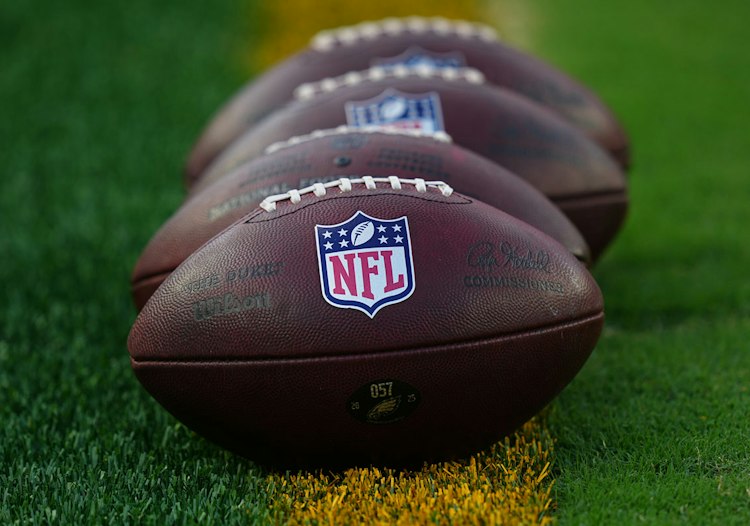
The NFL wants sports prediction markets to face the same state-level rules as traditional sportsbooks, arguing that current federal oversight leaves important gaps in consumer protections and game integrity.
In a Supreme Court filing supporting New Jersey regulators in their legal battle against Kalshi, the league argues that sports event contracts are effectively gambling products, not financial swaps that should fall exclusively under federal regulation.
The NFL is particularly concerned about customers as young as 18 trading sports contracts, the availability of markets susceptible to manipulation, and the risk of people using inside information to profit.
But Kalshi and Polymarket have pushed back, arguing that federal oversight offers a more consistent approach to protecting customers and the integrity of sporting events.
The NFL's position, first reported by CNBC, centers on whether state gambling regulators should retain authority over sports event contracts offered through federally regulated exchanges.
Kalshi maintains that its contracts are financial products overseen by the Commodity Futures Trading Commission (CFTC), rather than sports bets governed by individual state gambling laws.
The NFL disagrees, arguing that sports contracts create many of the same risks as traditional sports betting and should therefore face comparable safeguards.
The league says football accounted for $1.8 billion in trading volume on prediction markets on the first Sunday of the NFL season, representing more than half of all prediction market activity that day. The surge in trading was also highlighted in Dimers' coverage of Kalshi's record-breaking NFL opening weekend.
That figure highlights the scale of sports trading on these platforms, although prediction market trading volume is not directly comparable with traditional sportsbook handle.
The NFL says it is not opposed to prediction markets themselves but believes state regulators are better equipped to oversee sports-related products.
"In the end, we believe that given the current resource constraints of the CFTC, this is a job better left to the states," the league told CNBC.
One of the clearest differences between traditional sportsbooks and prediction markets is the minimum age required to participate.
Most regulated US sportsbooks require customers to be at least 21, while Kalshi permits trading from age 18.
The NFL wants a minimum age of 21 for participants in sports prediction markets, bringing those products into line with the standard used across much of the regulated sports betting industry.
It is also concerned about contracts involving events that players, officials, or other insiders could potentially influence or know about before the public.
Examples include whether a kicker misses a field goal, a player commits a fumble, or an injury occurs during a game. The league has also raised concerns about officiating-related contracts.
Unlike markets based on the final result of a game, these outcomes may be particularly vulnerable to manipulation or the misuse of nonpublic information.
"Neither the CFTC nor the prediction market companies themselves, despite our persistent urging, have banned categories of bets susceptible to manipulation or set a 21 age limit," the NFL told CNBC.
For bettors, the question extends beyond which regulator has jurisdiction. It is whether platforms offering substantially similar sports products should meet comparable standards for age verification, market integrity, and consumer protection.
Kalshi rejected the suggestion that federal regulation is insufficient, arguing that the CFTC already oversees sports event contracts and is developing additional rules.
In a statement responding to the NFL, Kalshi pointed to its relationships with other major sports organizations, including MLB, the NHL, and the USTA.
"All but the NFL have been willing to share data and collaborate to protect game integrity," Kalshi said.
The company also disputed the league's characterization of federal oversight.
"Contrary to the NFL's statements, the CFTC is actively policing sports-related markets, which are now listed on nearly every US commodities exchange," Kalshi said.
Kalshi argued that the regulator's ongoing rulemaking addresses many of the NFL's concerns and operates within a broader federal enforcement system covering financial markets.
The company also said it has repeatedly approached the NFL about collaborating on market integrity without receiving a response.
"We have consistently tried to engage proactively and constructively with the NFL to collaborate on market integrity with no response. We hope they change their position and start engaging to help ensure the integrity of sports."
Polymarket also defended federal oversight, arguing that a nationwide framework could provide stronger and more consistent integrity protections than separate state gambling regimes.
"Polymarket shares the NFL's commitment to preserving the integrity of the game, which is why we are constantly enhancing our own market surveillance tools while actively collaborating with the CFTC, SEC, and other professional leagues toward a harmonized federal framework that delivers stronger, more consistent form of integrity compared to a fragmented patchwork of state laws," a Polymarket spokesperson said.
The competing positions reveal a fundamental disagreement about how sports prediction markets should be regulated.
The NFL favors established state gambling frameworks, which already impose rules on licensed sportsbooks. Prediction market operators argue that federal regulation can provide consistent oversight without requiring them to navigate different gambling laws in every state.
Neither approach automatically guarantees better consumer protection. The practical question is which rules apply, how effectively they enforce them, and whether customers receive meaningful safeguards when they trade sports contracts.
The NFL's filing comes as federal appeals courts have reached conflicting conclusions about whether states can enforce gambling laws against sports event contracts offered through CFTC-regulated exchanges.
Those disagreements have raised the possibility of a Supreme Court ruling that could determine how much authority states retain over sports prediction markets.
The outcome could affect where sports contracts are available, which types of markets platforms can offer, and what protections customers receive.
For now, bettors can encounter different regulatory standards depending on whether they place a wager with a licensed sportsbook or trade a sports contract through a prediction market.
The NFL believes those differences create unacceptable risks. Kalshi and Polymarket maintain that federal oversight can address the same concerns without treating event contracts as traditional gambling.
Ultimately, the legal battle could determine not just who regulates sports prediction markets, but whether bettors using them receive protections comparable to those offered by licensed sportsbooks.
Disclosure: Dimers' parent company, Cipher Sports Technology Group, has commercial relationships with Kalshi and Polymarket that include customer acquisition.


Damien Souness is Chief Experience Officer at Cipher Sports Technology Group, helping lead sports media brands such as Dimers. He specializes in creating trustworthy and data-driven content for sports fans, with experience working for globally recognized sports and media organizations.